
Have you ever found yourself in a situation where you needed to speak a new language — maybe ordering food or asking for directions — and you just… froze?
You knew the vocabulary. You’ve studied the grammar rules for years. You can read a book in that language just fine. But when it came time to open your mouth, the words wouldn’t come out.
You aren’t alone, and you aren’t “bad at languages.” You are just a victim of how most of us were taught.
The Science: It’s Not About Knowing, It’s About “Doing”
A recent literature review published in Conciencia Digital analyzed 51 different studies to find out why A2 (elementary) level students struggle to move from “studying” to “speaking.”
The researchers found that traditional methods — memorizing lists and filling in blanks — fail to build Communicative Competence.
Think of it this way: You can’t learn to ride a bike by reading a physics textbook. You have to actually get on the bike and wobble around.
The study concluded that the most effective way to build fluency is through Communicative Language Teaching (CLT). Specifically, they found that students need strategies that force them to use language to solve problems. The most successful techniques identified were:
- Role-Play: Simulating real-world characters.
- Problem Solving: Using language to achieve a specific goal.
- Information Gaps: Situations where you must ask questions to get missing information.
The brain solidifies language pathways not when you passively receive information, but when you struggle to negotiate meaning in a real context.
Why Most Apps Fail You
The problem is that “negotiating meaning” is hard to do with an owl on a screen.
Most language apps focus on input (reading/listening) or passive recall (tapping the right word pair). They don’t require you to formulate original thoughts or handle the unpredictability of a real conversation.
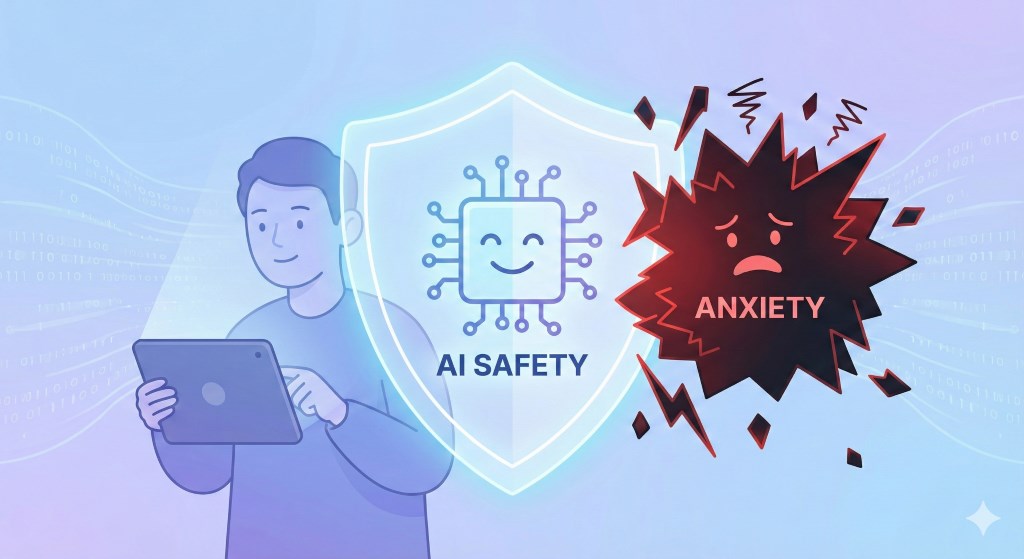
Furthermore, trying to do this in a real classroom can be terrifying. The study highlights that anxiety often blocks oral production. If you are afraid of making mistakes in front of a teacher or peers, your brain shuts down the creative centers needed for speech.
How DialogoVivo Turns This Science Into Software
I built DialogoVivo specifically to bridge this gap between “textbook knowledge” and “real-world speaking,” aligned directly with the findings of this study.
Here is how I apply the science:
- Role-Play on Demand: The study identified “role-play” as a top strategy. In DialogoVivo, every session is a role-play. You aren’t just translating sentences; you are a passenger in a taxi, a patient at a doctor’s office, or a customer in a shop.
- Goal-Oriented Interaction: Fluency comes from using language to do something. Our dialogs give you specific Goals (e.g., “Convince the driver to hurry” or “Ask for a different size”). This forces your brain to “problem solve” in your target language.
- The Safe Environment: I remove the anxiety factor. You are talking to an AI, not a human. It never judges you, never gets impatient, and is always ready to practice. This lowers your “Affective Filter,” allowing you to speak freely and make the mistakes necessary for learning.
- Immediate Feedback: While you practice, our Validation Agent acts as a personal tutor, correcting your phrasing in real-time so you don’t fossilize bad habits.
Stop Studying, Start Speaking
If you have been stuck at the “I understand but can’t speak” stage, it’s time to change your strategy. Stop memorizing lists and start using the language to solve problems.
Download DialogoVivo and try your first role-play scenario. It’s time to take the training wheels off.