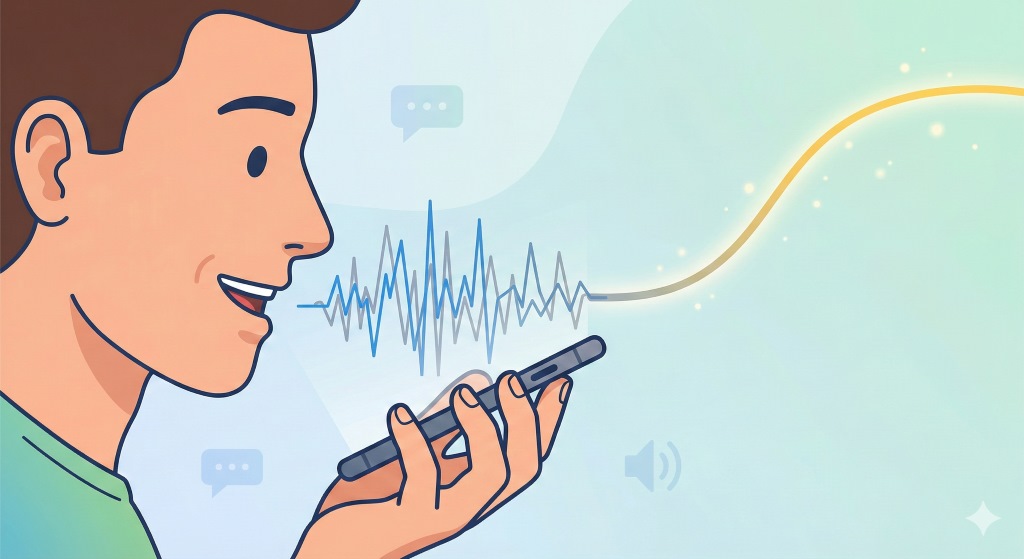
The Relatable Struggle: The "Mockery" Fear
We have all been there. You are practicing a new language at home, feeling confident. Then, you step into a real conversation—or even a classroom—and you freeze.
You know the word. You know the grammar. But you are terrified of pronouncing it wrong.
You are afraid of the "local accent" barrier—that moment when a native speaker squints at you in confusion, or worse, laughs. This fear is what linguists call Foreign Language Speaking Anxiety (FLSA). It triggers a psychological defense mechanism where your brain decides it is safer to stay silent than to risk humiliation.
The Simple Science: Robots Don’t Judge
A recent study titled "I Can Speak: improving English pronunciation through automatic speech recognition-based language learning systems" analyzed 117 students to see if technology could bypass this anxiety.
The researchers used ASR (Automatic Speech Recognition) tools—basically, AI that listens to you.
The findings were clear:
- Anxiety Drop: Students felt less anxiety because they didn't have to worry about being humiliated or laughed at by a human teacher or peer.
- The "Noticing" Hypothesis: The study confirmed that feedback needs to be specific. When the AI highlighted exactly which sound was wrong (phonetic feedback), students improved significantly more than when they just got a generic "Good job."
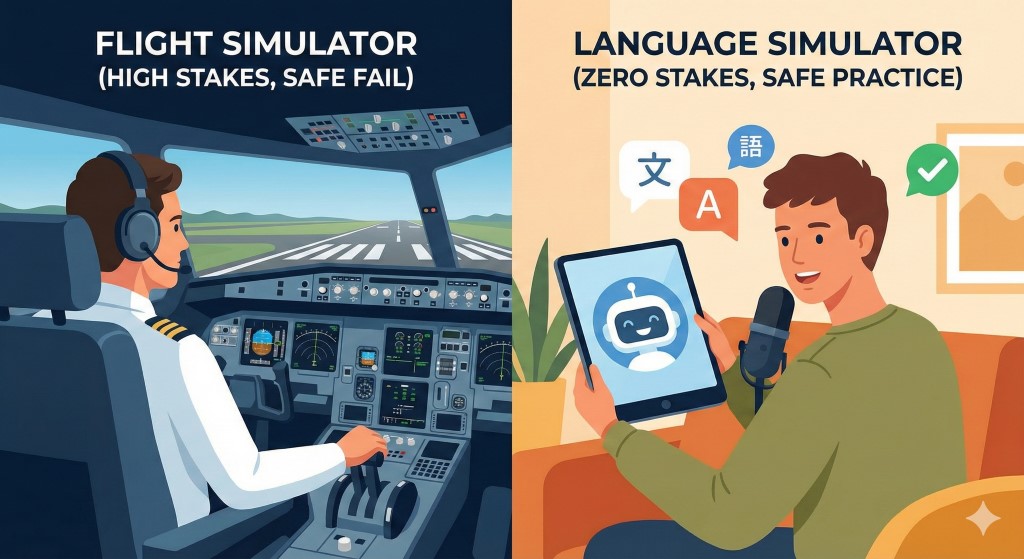
Think of it like a flight simulator. A pilot doesn't learn to handle a crash landing with real passengers on board. They learn in a simulator where crashing has no consequences. ASR is your flight simulator for speaking.
Why It Matters
This proves that the "immersion only" advice (just go talk to people!) is actually counter-productive for many learners.
If you have high anxiety, forcing yourself into human conversations before you are ready just reinforces the trauma of not being understood. Traditional classroom settings often fail here because teachers don't have the time to give you individual, phonetic feedback on every sentence you speak.
The Solution: The "Safe" Feedback Loop
This specific scientific principle—lowering the stakes to increase performance—is why I built DialogoVivo.
I wanted to replicate the results of the "NovoLearning" system mentioned in the study, which used detailed feedback to drive improvement.
- Zero Anxiety: You are role-playing with an AI. It doesn't care if you stutter or mispronounce a vowel. It lowers your "Affective Filter" so your brain can actually focus on learning.
- The Validation Agent: Just like the study suggests, generic feedback isn't enough. In DialogoVivo, the Validation Agent acts as the "phonetic detail" layer. It catches your phrasing and pronunciation errors instantly, allowing you to "notice" the gap between what you said and what you meant to say.
Try the Simulator
You don't need to fear the "awkward silence" anymore. If you want to test your pronunciation in a sandbox before trying it in the real world, DialogoVivo is available on Android.