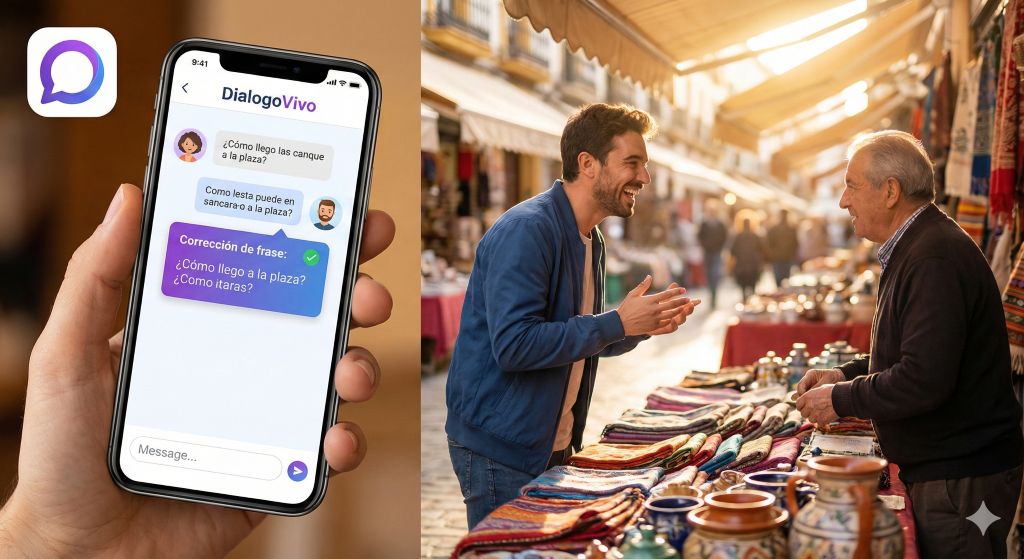
When I first started learning Spanish, I could read and write decently, but the moment someone spoke to me, I froze. Everything changed when I made speaking practice my priority. What began as awkward mumbling transformed into confident conversations that opened doors personally and professionally. Whether you're just starting out or looking to refine your fluency, these nine methods—ranging from solo techniques to cutting-edge AI partners—will help you practice speaking Spanish effectively, regardless of your current level.
Why Speaking Practice Was Essential for My Spanish Fluency
After six months of studying Spanish textbooks and apps, I could read news articles but couldn't order coffee in Madrid. This disconnect was frustrating but common. Research in language acquisition reveals why: speaking creates stronger neural pathways than passive learning because it forces simultaneous application of multiple language skills.
When we speak, our brain must simultaneously retrieve vocabulary, apply grammar rules, pronounce sounds correctly, and process incoming information—all in real-time. This integration creates deeper cognitive connections than reading or listening alone. According to studies in second language acquisition, this productive output is precisely what transforms knowledge into functional fluency.
Think of language learning as building muscle—you can watch workout videos all day, but actual strength only comes from lifting weights. Speaking is that workout for your Spanish skills.
Common Barriers I Faced When Speaking Spanish
My first language exchange was a disaster. I had prepared what to say, but when my Mexican conversation partner asked an unexpected question, I broke into a cold sweat and switched to English. This foreign language anxiety is something 70% of language learners experience.
The biggest barriers that held me back:
- Perfectionism: Wanting perfect grammar before speaking (solution: accept mistakes as learning opportunities)
- Fear of judgment: Worrying natives would mock my accent (they rarely do)
- Vocabulary gaps: Freezing when missing a word (solution: learn circumlocution strategies)
- Speed anxiety: Panicking when conversations moved quickly (solution: practice asking for slower speech)
- Performance pressure: Psychological barriers intensifying in group settings (solution: start with one-on-one conversations)
Why I Recommend Practicing with Native Spanish Speakers
After months of app-based learning, my first conversation with a Colombian friend taught me more authentic Spanish in 30 minutes than weeks of classroom study. Native speakers provide irreplaceable value through real-world language usage that textbooks simply can't capture.
When I later traveled through Spain, I discovered that my Colombian Spanish—with its distinct vocabulary and pronunciation—differed significantly from Castilian Spanish. In Madrid, I learned that what I called "computadora" was "ordenador" there, and my pronunciation of "z" and "c" needed adjustment to match the Castilian "th" sound.
These regional variations aren't just academic footnotes—they're essential for real comprehension across the Spanish-speaking world, from Mexico to Argentina to Spain, each with their unique accents and expressions.
Self-Practice Techniques I Use for Speaking Spanish
Before I found conversation partners, I developed a daily 20-minute self-practice routine that dramatically improved my confidence. Even now, as an advanced speaker, I return to these solo methods when preparing for important presentations or meetings in Spanish.
What makes self-practice powerful is the freedom to make mistakes without judgment. This psychological safety creates the perfect environment for experimental learning and risk-taking with new phrases and grammar patterns. Through consistent independent study, I built the foundational speaking skills that later made conversations with native speakers productive rather than overwhelming.
Seven effective solo speaking exercises I use:
- Describe my surroundings aloud for 5 minutes daily
- Narrate my actions while cooking or cleaning
- Read texts aloud with exaggerated pronunciation
- Record and critique my speaking samples
- Answer imaginary interview questions in Spanish
- Translate English news headlines into spoken Spanish
- Talk to myself in the mirror to practice facial expressions
How I Use Technology for Speaking Practice with AI
When I couldn't find native speakers in my small town, AI speaking partners became my daily conversation solution. After testing twelve different platforms, I found that the most effective ones used natural language processing to create genuinely conversational interactions rather than scripted responses.
My breakthrough came when preparing for a business presentation in Mexico City. I practiced with an AI conversation tool for two weeks, focusing on industry vocabulary and handling questions. At the actual event, colleagues commented on my natural flow and pronunciation—skills directly developed through these AI sessions.
Top AI conversation tools for Spanish practice:
| Tool | Best Features | Limitations | Cost | Best For Level |
|---|---|---|---|---|
| DialogoVivo | Real-time pronunciation feedback, adaptive responses | Limited regional accent options | $15/month | All levels |
| Speechling | Human coach feedback on recordings | Not real-time conversation | Free-$19.99/month | Beginner/Intermediate |
| Lingvist | Vocabulary focused interactions | Limited free-form conversation | $9.99/month | Beginner |
| Elsa Speak | Detailed pronunciation analysis | Limited conversation topics | $11.99/month | All levels |
| HelloTalk AI | Simulates texting with natives | No voice interaction | Free-$6.99/month | Intermediate |
My Google Docs Voice Recognition Technique
I stumbled upon this free pronunciation hack by accident. While dictating notes in Spanish, I noticed Google Docs consistently misunderstood certain words—revealing my pronunciation problems more effectively than any app.
Here's my exact process:
- Open a new Google Doc and enable voice typing (Tools → Voice typing)
- Set the input language to Spanish
- Read a Spanish text aloud
- Review what Google transcribed—each error highlights a pronunciation issue
- Focus practice on those specific sounds
This method helped me identify my persistent trouble with Spanish "r" sounds. When I said "perro," Google Docs would transcribe "pero"—revealing my failure to properly roll the double-r. After targeted practice, the transcription accuracy improved, confirming my pronunciation had too.
How I Found Spanish Conversation Partners
After six months of solo practice, I knew I needed real conversations to progress. Finding my first language exchange partner—a university student from Spain who wanted to practice English—was a game-changer. What began as awkward 30-minute exchanges has evolved into a network of Spanish-speaking friends and professional contacts across three continents.
The key to successful language exchanges is establishing clear expectations about time, correction methods, and conversation balance. I always propose a 50/50 time split between languages and ask partners to note major errors for review after, not during, conversation flow. This approach maintains both language equity and conversational momentum.
Beyond language benefits, these exchanges opened unexpected doors to intercultural understanding. My Spanish friends have explained cultural nuances from different regions that no textbook covers—from business etiquette in Mexico to family traditions in Andalusia. These insights have proven invaluable in both personal connections and professional settings.
Online Resources I Use for Spanish Conversation Practice
After testing numerous platforms, I found three types of online resources particularly valuable: structured language exchange platforms, community-based informal groups, and professional tutoring services.
iTalki became my primary resource after disappointing experiences with apps that prioritized quantity of matches over quality of conversations. Through iTalki, I connected with Carmen, a retired teacher from Barcelona who not only corrected my Catalan-influenced Spanish but also became a valued mentor for professional vocabulary in my field.
For group practice, Spanish-specific Discord servers provided casual drop-in conversations without the scheduling hassles of formal exchanges. These communities often organize around interests like gaming, music, or professional fields, creating natural conversation contexts beyond language itself.
Platform-specific tip: Always review a potential partner's feedback history and communication style before committing to regular exchanges. The quality of conversation matters far more than quantity.
In-Person Opportunities I've Found for Spanish Practice
Despite living in a predominantly English-speaking city, I found surprising in-person Spanish practice opportunities hiding in plain sight. Local university cultural centers, community colleges, and even some libraries host regular language exchange events that welcome community members.
Places to find Spanish speakers locally:
- Hispanic cultural centers and community organizations
- University language departments' conversation hours
- Meetup.com language exchange groups
- Spanish-language church services
- Hispanic grocery stores and restaurants
- Latino community festivals and events
- Volunteer opportunities serving Spanish-speaking populations
- Instituto Cervantes branches (in major cities)
My Experience Working with Online Spanish Teachers
After hitting a plateau with informal exchanges, I invested in professional instruction to target specific weaknesses in my speaking. When selecting a teacher, I learned that teaching style compatibility matters more than credentials—some highly qualified teachers used methods that didn't match my learning preferences.
My breakthrough came with Alejandro, a teacher from Mexico who specialized in business Spanish. His personalized instruction focused on the presentation skills I needed, with homework assignments requiring me to record mini-presentations for detailed feedback. This targeted practice directly translated to greater confidence in professional settings.
When choosing a Spanish teacher, look for:
- Experience teaching your specific level
- Familiarity with your target dialect/region
- Willingness to customize lessons to your goals
- Teaching style that matches your learning preferences
- Comfort with providing direct but supportive correction
How I Structure Speaking Practice by Proficiency Level
My most significant speaking improvements came after organizing practice according to proficiency benchmarks from the Common European Framework (CEFR). Instead of random conversations, I created a progressive learning path with level-appropriate topics and challenges.
At each level, I found certain conversation structures particularly effective. For A1-A2 (beginner), simple question-and-answer exchanges about concrete topics built confidence. At B1-B2 (intermediate), storytelling and opinion discussions developed more complex speaking skills. By C1-C2 (advanced), debates and specialized professional topics helped refine nuanced expression.
This scaffolded approach prevented the common trap of attempting conversations beyond my level—which often led to frustration—while still providing enough challenge to make meaningful progress.
Beginner Conversation Topics and Phrases I Recommend
When I started speaking Spanish, focusing on high-frequency situations with predictable vocabulary accelerated my confidence. These simple dialogues created successful experiences that motivated continued practice.
10 Easy Conversation Starters for Beginners:
- ¿De dónde eres? (Where are you from?) - Opens geography discussions
- ¿Qué hiciste hoy? (What did you do today?) - Practices simple past tense
- ¿Qué te gusta comer? (What do you like to eat?) - Food vocabulary practice
- ¿Tienes mascotas? (Do you have pets?) - Family and animals vocabulary
- ¿Cuál es tu película favorita? (What's your favorite movie?) - Entertainment vocabulary
- ¿Cómo es el clima hoy? (How's the weather today?) - Weather expressions
- ¿Qué haces en tu tiempo libre? (What do you do in your free time?) - Hobbies vocabulary
- ¿A qué hora te despiertas? (What time do you wake up?) - Daily routine practice
- ¿Puedes describir tu casa? (Can you describe your home?) - Housing vocabulary
- ¿Qué vas a hacer mañana? (What are you going to do tomorrow?) - Future tense practice
Intermediate Conversation Strategies That Worked for Me
At intermediate level, my conversations often stalled because I could start discussions but struggled to maintain them. Two techniques transformed my ability: conversation extenders and opinion frameworks.
I prepared versatile phrases that could keep exchanges flowing when I wasn't sure how to respond. Instead of one-word answers that killed conversations, I practiced adding details, asking follow-up questions, and connecting topics to personal experiences.
Conversation Extenders:
- Eso me recuerda cuando... (That reminds me of when...)
- Es interesante porque... (That's interesting because...)
- No estoy seguro, pero creo que... (I'm not sure, but I think...)
- ¿Y tú qué piensas sobre...? (And what do you think about...?)
- Por un lado... pero por otro lado... (On one hand... but on the other hand...)
- Eso me hace sentir... (That makes me feel...)
My language journal showed dramatic improvement after implementing these strategies—conversations that previously lasted 5 minutes stretched to 20+ minutes with greater depth and natural flow.
Advanced Spanish Speaking Challenges I Set for Myself
To break through the advanced plateau, I created targeted challenges that pushed beyond comfortable conversation into professional and academic Spanish. The most effective exercises combined linguistic complexity with authentic high-stakes scenarios.
Advanced Spanish Challenges:
| Challenge Type | Description | Expected Outcome |
|---|---|---|
| Debate Preparation | Research and argue both sides of a controversial topic with a tutor | Improved persuasive language and quick thinking |
| Regional Accent Adaptation | Weekly conversations with speakers from different countries, noting dialect differences | Improved comprehension across regional variations |
| Technical Presentation | Deliver a 10-minute presentation on your professional specialty | Field-specific vocabulary mastery |
| Idiomatic Expression Integration | Naturally incorporate 3 new colloquial expressions per conversation | More authentic, native-like speech |
| Abstract Concept Explanation | Explain philosophical concepts like justice or beauty | Enhanced abstract vocabulary and complex structure use |
How I Measure and Track My Speaking Progress
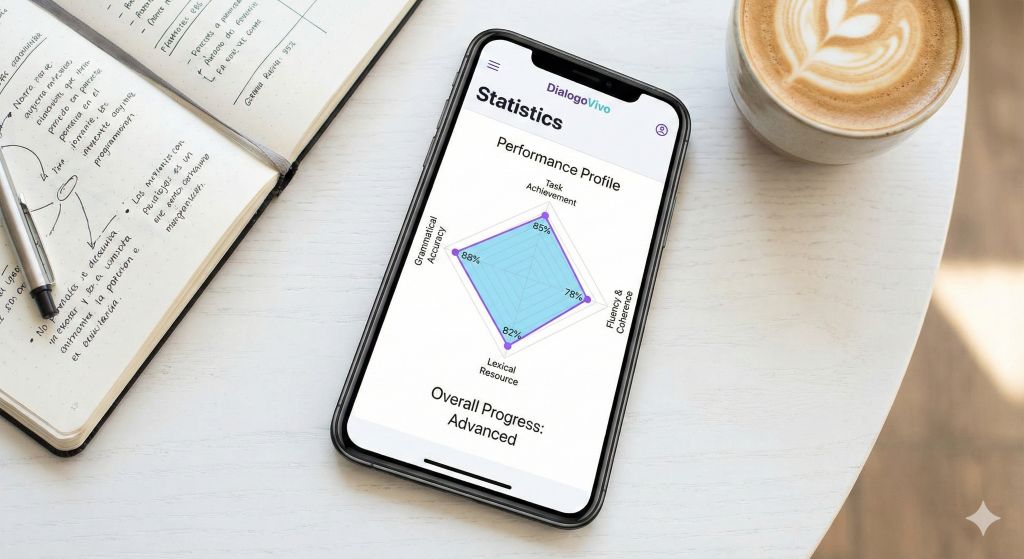
After months of practice with no clear measure of improvement, I developed a practical self-assessment system that provided concrete evidence of progress and maintained motivation during plateaus.
Rather than vague goals like "speak better," I established specific benchmarks: holding a 5-minute conversation without English, explaining my job in Spanish, or successfully handling unexpected questions. Each accomplished goal became a measurable win in my language portfolio.
My most effective tracking method was recording regular speaking samples addressing the same topics every three months. Comparing these recordings provided objective evidence of improvement in fluency, vocabulary range, grammatical accuracy, and pronunciation—even during periods when subjective perception suggested stagnation.
This approach transformed frustrating plateaus into data-driven practice opportunities by identifying specific weaknesses needing targeted attention rather than general "more practice."
Creating My Sustainable Spanish Speaking Practice Routine
After the initial excitement wore off, maintaining consistent speaking practice became my biggest challenge. The solution wasn't finding more time but integrating Spanish into existing daily activities—what I call "habit stacking."
My sustainable routine combines scheduled dedicated practice with opportunistic language moments. Monday evenings are for 30-minute tutoring sessions, while Wednesday mornings include a 20-minute language exchange during my commute. Throughout the week, I narrate my cooking in Spanish, listen to Spanish podcasts while exercising, and change my phone language to Spanish.
This combination of formal practice and integrated daily exposure creates a sustainable approach that withstands busy periods. During work crunch times when formal practice falls away, the embedded habits maintain basic skills until I can resume more intensive practice.
15-Minute Spanish Speaking Activities:
- Record yourself describing your day and listen for errors
- Call an automated Spanish customer service line and navigate the menu
- Explain a current news headline in Spanish as if teaching someone
- Translate your grocery list aloud while shopping
- Have a quick chat with an AI language partner
Spanish Dialogue Drills and Repetition Techniques That Improved My Fluency
The breakthrough in my pronunciation came from targeted drills focusing on troublesome sound combinations. After recording myself and identifying my weak spots—particularly the Spanish "r" and vowel combinations—I developed a daily 10-minute drill routine.
The shadowing technique proved particularly effective: I would play short audio clips of native speakers, pause after each phrase, and immediately repeat it with identical intonation and rhythm. This auditory learning approach improved not just pronunciation but also the natural cadence of my speech.
My Progressive Dialogue Drill:
- Master individual challenging sounds (the rolled "rr" in "perro")
- Practice those sounds in isolated words ("perro," "carro," "guitarrista")
- Incorporate words into simple sentences ("Mi perro es grande")
- Expand to complex sentences ("Mi perro es grande pero no es agresivo")
- Build to full conversational exchanges about the topic
This structured progression allowed me to develop automaticity with difficult sounds before attempting them in free-flowing conversation.
Specific Challenges I Faced as an English Speaker Learning Spanish
Teaching Spanish to students from diverse language backgrounds revealed how first language transfer creates unique challenges for each learner. As an English speaker, my specific hurdles differed from those of my Japanese, French, or Arabic-speaking students.
My persistent pronunciation struggles stemmed from phonological differences between English and Spanish despite their shared Latin roots. The Spanish trilled "r," pure vowel sounds, and consonants like "ñ" required targeted practice to overcome ingrained English speaking patterns.
Beyond pronunciation, false cognates created recurring problems. Words like "embarazada" (pregnant, not embarrassed) and "actualmente" (currently, not actually) led to awkward miscommunications that language interference from English made particularly tricky to eliminate.
For English speakers, these focused exercises proved most helpful:
- Vowel purity drills (Spanish vowels don't change in unstressed syllables)
- Rhythm practice (Spanish is syllable-timed versus English's stress-timing)
- Minimal pair training for b/v sounds (virtually identical in Spanish)
My Real-World Speaking Experiences: From Practice to Application
After six months of dedicated practice, I traveled to Barcelona for the real test. My first day was humbling—the rapid speech of locals bore little resemblance to my carefully paced language exchanges. But by day three, my ear had adjusted, and I successfully navigated everything from taxi directions to restaurant recommendations.
What surprised me most was how situational language varied by context. The formal Spanish needed at the bank differed dramatically from the casual expressions at neighborhood cafés. My travel Spanish vocabulary expanded daily with practical phrases never taught in textbooks.
Later, using business Spanish in professional settings revealed another challenge—industry-specific terminology and formal register requirements that my casual conversation practice hadn't prepared me for. This required targeted vocabulary building and formality adjustments.
The most valuable practice technique proved to be mental rehearsal before real-world situations—imagining likely conversations and preparing for various responses rather than memorizing static phrases.
Frequently Asked Questions
- How can I practice speaking Spanish by myself?
Record yourself speaking, narrate daily activities in Spanish, read texts aloud, use voice recognition software for feedback, talk back to Spanish podcasts, create imaginary dialogues, or use AI conversation partners like DialogoVivo for interactive practice without another person. - What are the best ways to practice speaking Spanish with native speakers?
Find language exchange partners through platforms like iTalki, join Spanish conversation meetups, take classes with native teachers, volunteer with Spanish-speaking communities, participate in online forums or Discord servers, or use social media to connect with Spanish speakers sharing your interests. - How can I overcome fear of speaking Spanish with others?
Start with low-pressure situations like AI conversation partners, prepare topics in advance, accept that mistakes are normal learning tools, begin with one-on-one exchanges before groups, and remember that native speakers are usually patient and appreciative of your efforts. - What AI tools can help me practice speaking Spanish?
DialogoVivo offers adaptive conversation practice with pronunciation feedback, Speechling provides human coach assessments of your recordings, Elsa Speak focuses on accent reduction, HelloTalk AI simulates texting with natives, and even Google Docs' voice typing can identify pronunciation issues. - How often should I practice speaking Spanish to see improvement?
Consistent short sessions beat infrequent long ones. Aim for 15-20 minutes of speaking practice at least 3-4 times weekly. Daily 5-minute speaking exercises combined with weekly longer conversations will show noticeable improvement within a month. - How can I correct my Spanish pronunciation errors?
Record yourself speaking and compare with native speakers, use speech recognition tools to identify misunderstood words, ask native speakers for specific feedback, practice minimal pairs for troublesome sounds, and use shadowing techniques to mimic native intonation patterns. - Where can I find Spanish conversation partners online?
Language exchange websites like iTalki, Tandem, and HelloTalk, conversation-focused Discord servers, Spanish learning subreddits, Facebook groups for language exchanges, community college online conversation hours, and professional tutoring services all offer different conversation opportunities. - What conversation topics should I practice at different Spanish levels?
Beginners: Daily routines, basic personal information, simple preferences. Intermediate: Past experiences, future plans, opinions on familiar topics. Advanced: Complex social issues, hypothetical situations, specialized professional topics, and nuanced cultural discussions. - Is it better to practice with one consistent partner or multiple different ones?
Both have value. A consistent partner provides comfort and tracks your progress, while multiple partners expose you to different accents, conversation styles, and vocabulary. Ideally, maintain 1-2 regular partners while occasionally practicing with new people. - What are common mistakes English speakers make when speaking Spanish?
Using English word order for adjectives, applying English pronunciation rules to vowels, confusing ser/estar and por/para distinctions, literal translations of idioms, incorrect subject pronoun usage (Spanish often omits them), and false cognate confusion. - Why practice speaking Spanish with a native speaker?
Native speakers provide authentic pronunciation models, natural vocabulary usage, cultural context for expressions, immediate feedback on communication effectiveness, and exposure to colloquial language that textbooks rarely cover. - What are the benefits of practicing with speakers from different regions?
You'll understand diverse accents and speech patterns, learn regional vocabulary variations, develop more flexible listening skills, gain cultural insights from different Spanish-speaking countries, and prepare for real-world travel or business interactions across the Spanish-speaking world. - What do I need to practice speaking Spanish at home?
Basic requirements are minimal: learning materials with audio components, a recording device (smartphone works), and internet connection for finding partners. For better results, add a comfortable headset with microphone and language exchange or AI practice apps. - What are effective techniques for learning Spanish?
Combine regular speaking practice with spaced repetition for vocabulary, focus on high-frequency words first, use content you enjoy (music, shows, podcasts), practice in realistic contexts rather than isolated exercises, and maintain a consistent study schedule with measurable goals. - How can I find Spanish speakers in real life?
Check university language departments' conversation hours, community cultural centers, meetup groups specifically for language exchange, volunteer organizations serving Spanish-speaking populations, Hispanic cultural festivals, international student associations, and Spanish-language religious services.